 English
 Spanish
 French
 Italian
 German

HS SYMPTOMS
What are the symptoms of HS?
First, what does the word ‘symptoms’ mean?
Symptoms are all of the ways HS (hidradenitis suppurativa) changes the look and feel of your skin such as redness, darkening, or swelling. It also describes all the feelings from your skin, like pain, itch, or pulling. The symptoms are due to too much inflammation, and the strength (or intensity) of these symptoms can change over time. It may start as being sensitive, then change to ‘10 out of 10’ painful, then end by being itchy.
Early Symptoms of HS
HS can look and feel different for each person, especially in the early stages. It often begins as a small, tender bump in areas where skin rubs together—such as the inner thighs, underarms, or under the breasts. These bumps are commonly mistaken for pimples or ingrown hairs.
Early HS symptoms may include bumps that:
- Feel painful or sore to the touch
- Slowly grow larger
- Last for weeks or even months instead of healing
- Reappear in the same spot after they seem to go away
At this stage, the skin may look relatively normal between flares, which can make HS harder to recognize early on.
Later or More Severe HS Symptoms
As HS progresses, bumps can become more inflamed and may change in appearance or behavior. These areas are often described by health care providers using different terms based on what is happening under the skin.
Later or more severe symptoms may include:
- Nodules
Firm, painful lumps deep under the skin caused by inflammation. - Abscesses
Inflamed areas with fluid inside that may rupture and drain. Drainage can be cloudy, mixed with blood, or have a strong odor—this is common in HS and does not mean poor hygiene. - Tunnels (Sinus Tracts)
Long, stretched‑out areas of inflammation under the skin that can connect multiple lesions. These tunnels may stay active for long periods or open and drain from time to time.
These symptoms most often occur in the underarms, groin, under the breasts, genitals, or on and between the buttocks.
When lesions heal, they may leave behind skin discoloration or scars. When HS symptoms return or suddenly worsen, this is called a flare or flare‑up.
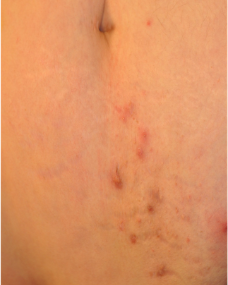
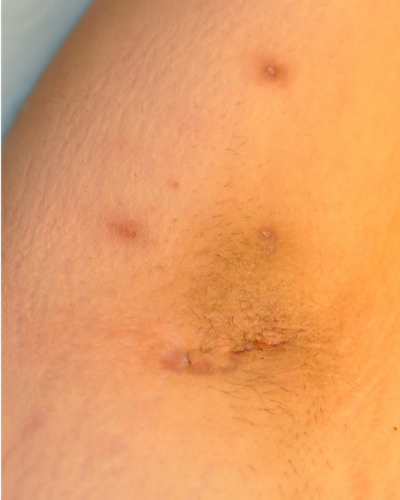
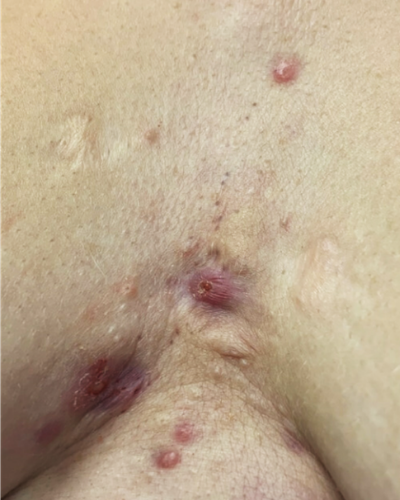
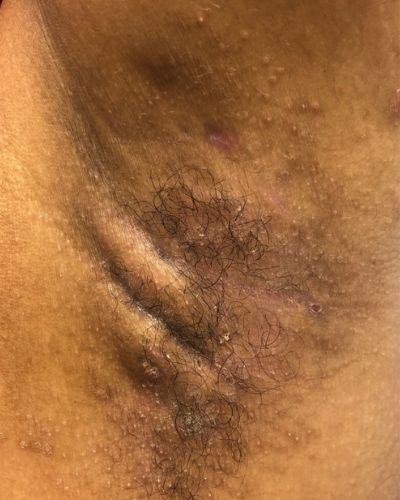
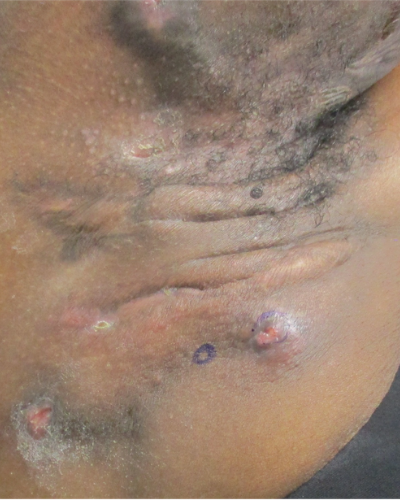
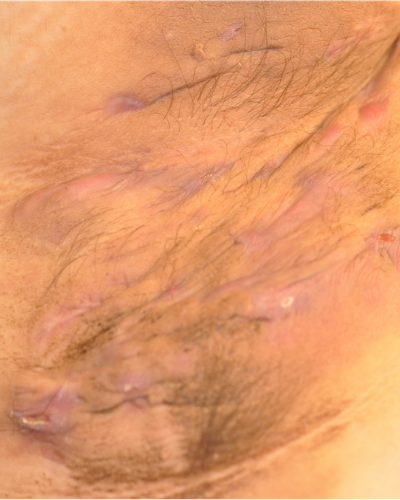
HS can appear very different from person to person, and symptoms do not always follow a straight progression. The images below show examples of how HS may appear at different times—not definitions of how “mild” or “severe” someone’s experience is. Pain and impact on daily life can be significant at any stage.
Examples of mild HS symptoms
Examples of moderate HS symptoms
Examples of severe HS symptoms
Understanding Hurley Stages in HS
Health care providers sometimes use a staging system, called the Hurley stages, to describe patterns of HS symptoms. These stages help guide treatment choices, but they do not define a person’s experience with HS. Symptoms can change over time, and not everyone fits neatly into one stage. The stages are based on the types of lesions present and whether tunnels or scarring have developed—not on pain level or quality of life, which can be serious at any stage.
Hurley Stage I
- Single or multiple inflamed bumps (nodules or abscesses)
- No tunnels under the skin
- Little or no scarring
People at this stage may still experience significant pain or frequent flares.
Hurley Stage II
- Recurrent abscesses
- Tunnels under the skin
- Scarring may be present
- Lesions may appear in multiple areas
Symptoms may come and go, with periods of improvement and flare‑ups.
Hurley Stage III
- Widespread inflamed areas
- Multiple interconnected tunnels
- Significant scarring
- Lesions may be constantly active
This stage reflects the pattern of disease, not the effort or actions of the person living with HS.
Important: Hurley stages can change over time. Early treatment and ongoing care may help prevent progression and improve symptoms.
How is HS Diagnosed?
Because HS symptoms can look like many other skin conditions, diagnosis is based on a combination of what your provider sees and what you’ve experienced over time.
To diagnose HS, your health care provider will:
- Examine your skin, especially areas where lesions tend to recur
- Ask about your symptoms, including where they occur, how long they last, and whether they come back in the same areas over time
Sometimes, if a lesion is draining, your provider may take a swab of the fluid. Even if bacteria are found, this does not mean HS is an infection. HS is driven by inflammation, not bacteria.
There is no single blood test or skin test that can diagnose HS. This is why sharing your full symptom history—not just what is visible on the day of your appointment—is so important. Getting an accurate diagnosis helps you and your provider choose the most appropriate treatments.
Think you or someone you know may have HS?
Use what you’ve learned on this page to track your symptoms and share your full history with a medical provider or dermatologist. Early and accurate diagnosis can help guide treatment and improve quality of life.
| Patient Resources | HS Provider Database | Treatment Options |