 English
 Spanish
 French
 Italian
 German

HS TOOLKIT
Hidradenitis suppurativa is often diagnosed years after symptoms begin, and that delay can mean irreversible tissue damage by the time patients reach appropriate treatment. The resources below were developed by the HS Foundation, in several cases in partnership with UCB, to help dermatologists, residents, and care teams recognize HS earlier, screen for the comorbidities that so often accompany it, and support patients through ongoing wound care. Each resource is available to preview below and download as a PDF for use in clinic or to share with your team.
Understanding HS Progression
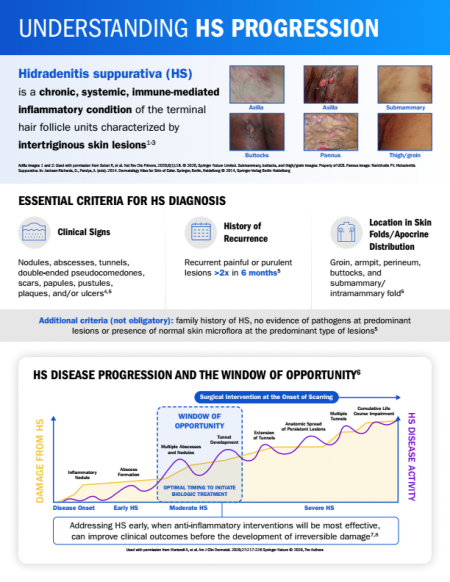
Hidradenitis suppurativa is chronic, systemic, and immune-mediated, and it's still commonly mistaken for acne, folliculitis, or recurrent boils. That misdiagnosis can cost patients years, allowing inflammatory nodules to progress into abscesses, tunnels, and eventually irreversible scarring. This resource walks through the essential diagnostic criteria, from recurrent lesions in typical skin fold locations to the validated boils questionnaire that can flag inverse recurrent suppuration in a routine visit, so providers have a fast, reliable way to confirm HS earlier in its course.
It also covers why the Hurley staging system, while useful for surgical planning, often falls short of capturing a patient's full disease burden and inflammation. In its place, you'll find an overview of standardized tools built specifically for tracking treatment response and quality of life, including HiSCR, the HS Symptom Questionnaire, and HiSQOL. Alongside these, a visual breakdown of the disease progression timeline highlights the window during which biologic intervention has the greatest chance of preventing permanent tunnel formation and long-term impairment.
HS Disease Progression and the Window of Opportunity
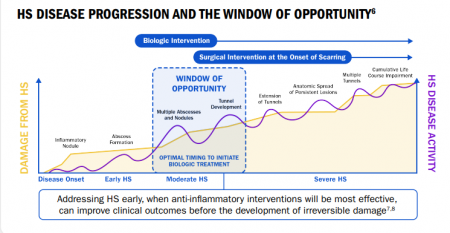
This standalone visual maps the full arc of HS, from the first inflammatory nodule through multiple tunnels and cumulative life course impairment, plotted against both disease activity and damage. It's designed to be quick to reference in clinic or to share with a patient to help explain why early treatment decisions matter, without requiring a full read of a clinical overview.
The highlighted "window of opportunity" marks the point, typically during moderate HS, when starting biologic treatment is most likely to prevent the disease from progressing to extensive tunneling and scarring. Providers can use this figure as a conversation aid with patients who are hesitant about starting systemic treatment early, or as a quick internal reference when staging a new patient.
Beneath the Skin: A Guide to HS Comorbidity Screening
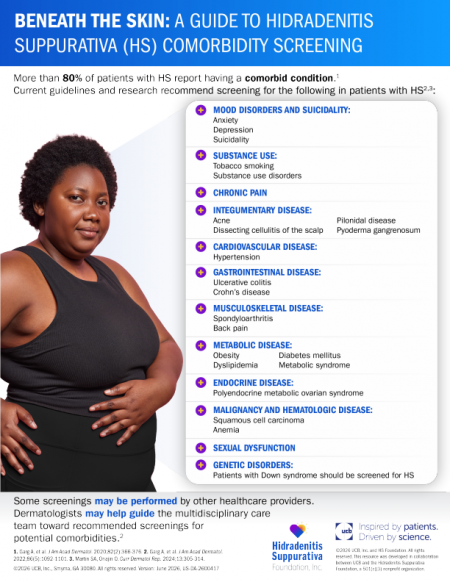
More than 80% of patients with HS report at least one comorbid condition, yet many go undetected simply because no one asked. This guide organizes the comorbidities most associated with HS, including mood disorders and suicidality, cardiovascular and metabolic disease, gastrointestinal conditions, musculoskeletal disease, and substance use, into a single reference a provider can move through during a standard visit rather than needing a specialist referral just to start the conversation.
For each condition, the guide includes a brief screening question or validated tool your practice can use directly, along with clear guidance on when a referral to psychiatry, cardiology, gastroenterology, or another specialty is warranted. Ready-to-use screeners such as the PHQ-9, GAD-7, and AUDIT-C are included so your team can administer them without hunting down a separate form, making it easier to build comorbidity screening into routine HS care rather than treating it as an afterthought.
Wound Care Arsenal: Guide to HS Wound Management
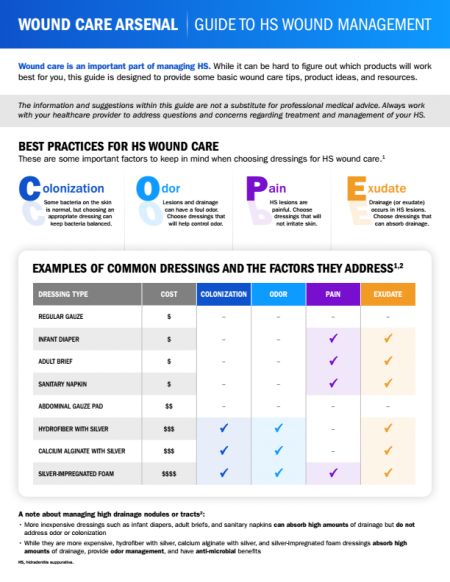
Many patients manage HS wounds on their own between visits, often reaching for whatever is on hand rather than a dressing suited to their specific lesion. This guide gives providers a side-by-side comparison of common dressing options, from low-cost choices like sanitary napkins and adult briefs to more advanced options like silver-impregnated foam, evaluated against the four factors that matter most for HS wounds: colonization, odor, pain, and exudate.
Beyond the comparison table, the guide covers practical guidance you can pass along directly to patients, including clothing choices that reduce friction and irritation, pain management options worth discussing with their care team, and what to expect during recovery from a deroofing or wide excision procedure. It also points patients toward the HS Foundation's Wound Care Clinic Database, so providers have a ready answer when a patient asks where to get specialized wound care nearby.
This website is neither intended nor designed to record or report safety information related to any product. If you have experienced an adverse event (side effect) with any product, please contact your doctor and contact the manufacturer directly.