 English
 Spanish
 French
 Italian
 German

SEPTEMBER 27, 2025
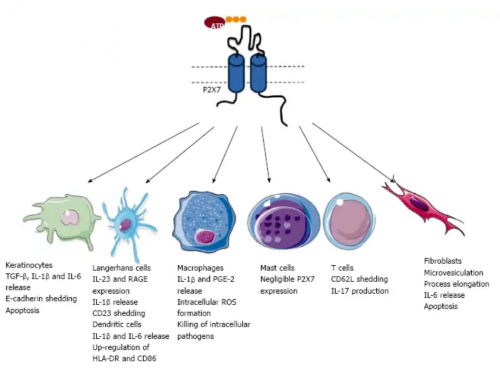
The P2X7-NLRP3 inflammasome inhibitor AZD9056 has no significant effect on hidradenitis suppurativa clinical disease activity but restores cytokine production in peripheral blood mononuclear cells: Results of a phase 2 trial
Summary Verified By: Kavita Sarin, M.D. Ph.D. | Stanford University
September 27, 2025
This plain-language research summary was generated by AI, courtesy of HS Simplified.
The P2X7-NLRP3 inflammasome inhibitor AZD9056 has no significant effect on hidradenitis suppurativa clinical disease activity but restores cytokine production in peripheral blood mononuclear cells: Results of a phase 2 trial
In a 2025 study examining the autoimmune skin condition hidradenitis suppurativa (HS), researchers tested the effectiveness of AZD9056, a drug targeting the P2X7 receptor—a protein that plays a role in inflammatory processes. In this small study, AZD9056 did not significantly affect disease severity, indicating the potential for alternate pathways or treatments to target HS more effectively. However, it may restore immune response to certain triggers.
Testing a New Drug for Hidradenitis Suppurativa
Hidradenitis suppurativa (HS) is a painful skin condition where bumps, abscesses, and tunnels form under the skin, especially in places where skin rubs together, like the armpits or groin. Scientists think that part of the problem in HS may be overactivity of something called the NLRP3 inflammasome. This is a group of proteins in our immune system that, when switched on, tell the body to make chemicals called cytokines that cause inflammation and swelling.
Another important piece in this process is the P2X7 receptor. This is like a switch on immune cells that helps turn on the NLRP3 inflammasome. The drug AZD9056 was designed to block the P2X7 receptor, with the hope that it could calm down the inflammation in HS.
How the Study Was Done
Kilgour and his team ran a clinical trial to test if AZD9056 would help people with HS. In the first part of the study, some adults with HS took either AZD9056 or a placebo (a pill with no medicine) for 12 weeks, without knowing which one they got. In the second part, everyone got AZD9056 for another 12 weeks. The researchers checked how bad the HS was at the start, after 12 weeks, and after 24 weeks. They also took blood and skin samples to look at changes in cytokines and immune cells.
What Did They Find?
The results were not what the scientists hoped for. At 12 weeks, 40% of people taking AZD9056 showed improvement in their HS, but so did 71% of those on the placebo. By 24 weeks, the people on AZD9056 did not show any improvement, while 50% of the placebo group did. This means that AZD9056 did not work better than the fake pill at helping HS get better.
When the researchers looked at blood and skin samples, they saw almost no change in most cytokines. However, when they tested immune cells from the blood in the lab, they found that some cytokines (like IL-1β, IL-6, IL-13, and TNF-α) went up after stimulation in the AZD9056 treatment group but did not respond as well in the placebo group. This means the drug could wake up certain immune cells that were tired out, a problem known as immune exhaustion.
What Does This Mean?
The main finding is that AZD9056 did not help people’s skin get better in this study. Even though it changed some immune cell activity in the lab, this did not make a difference for patients’ symptoms. The researchers think the P2X7 receptor might not be a good target for treating HS, but the NLRP3 inflammasome could still be important.
On a positive note, AZD9056 was safe and did not cause serious side effects. Also, by restoring some immune function in blood cells, it might help protect against infections, which are common in people with HS. However, this idea needs more research.
Limitations of the Study
This study had a very small number of patients (only 12 people), and the researchers stopped early because the drug was not working. With so few people, it is hard to be sure about the results. Also, the changes seen in blood cells may not matter for the actual skin disease.
The Takeaway
Even though blocking the P2X7 receptor with AZD9056 did not help HS in this trial, scientists learned more about how the immune system works in this disease. The search for better treatments for HS continues, and new ideas are being tested.
Author(s)
James M Kilgour, Hal Landy, Alexa B Kimball, Barry I Resnik, Milan J Anadkat, Sunil Dhawan, Mark de Souza, Kavita Y Sarin
Read Original Paper
https://pubmed.ncbi.nlm.nih.gov/41022330/