 English
 Spanish
 French
 Italian
 German

SEPTEMBER 3, 2025
The prevalence of endometriosis in adult female patients with hidradenitis suppurativa: a cross-sectional study using the All of Us Research Program
Summary Verified By: Anna Eisenstein, M.D. Ph.D. | Yale School of Medicine
September 3, 2025
This plain-language research summary was generated by AI, courtesy of HS Simplified.
The prevalence of endometriosis in adult female patients with hidradenitis suppurativa: a cross-sectional study using the All of Us Research Program
A 2025 study explores a potential link between hidradenitis suppurativa (HS), a chronic skin condition causing painful lumps, and endometriosis, characterized by endometrial tissue growing outside the uterus and causing pain. Using a large dataset, researchers found that women with HS had a 1.67 times higher chance of also having endometriosis, highlighting the need for further research on shared inflammatory pathways.
Are Two Painful Conditions Connected?
Researchers led by Hodelin, Cohen, and Eisenstein wanted to find out if there is a link between two health conditions that affect some women: hidradenitis suppurativa (HS) and endometriosis.
HS is a chronic skin disease that causes painful bumps, cysts and tunnels, often in areas where skin rubs together, like the armpits or groin. Endometriosis is when tissue that normally lines the inside of the uterus grows outside of it. This can cause bad period cramps, pain during sex, and trouble having babies.
How Did They Study This?
The researchers used a large health database called the All of Us Research Program, which includes information from people of different backgrounds. They looked at women 18 and older with health records, checking who had HS and who had endometriosis.
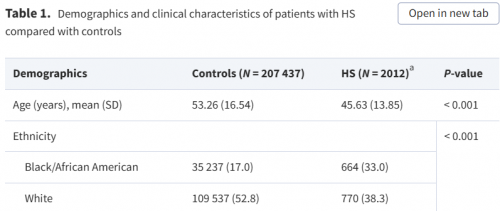
They compared 2,012 women with HS to over 207,000 women without HS. They also looked at things like age, weight, race, income, and if they smoked to make sure these didn’t affect the results.
What Did They Find?
The scientists found that women with HS were more than twice as likely to have endometriosis compared to women without HS (7.2% vs. 3.3%). Even after taking other factors into account, women with HS still had about a 67% higher chance of also having endometriosis.
When looking at different age groups, the connection was strong in all ages, but especially high for women over 60 with HS.
Why Might These Be Linked?
Both HS and endometriosis are inflammatory diseases, meaning the body’s immune system is overactive in some way. The researchers think certain immune chemicals (like cytokines) and hormones might play a role in both. For example, having more body fat (which is common in HS) can affect hormone levels, possibly making both conditions worse.
Birth control pills can sometimes help with both HS and endometriosis, which suggests that hormones are important in both diseases.
What Are the Study’s Limitations?
There are a few things this study could not answer. It used diagnosis codes from medical records, so it can’t tell if someone still has the disease or how bad it is. Also, it can’t show which disease happened first, or if one causes the other.
Still, this study involved many individuals and included women from different backgrounds, making the results strong. More research is needed to understand how these two conditions are connected and if treating one can help the other.
Why Does This Matter?
If doctors know that women with HS are more likely to have endometriosis, they can watch out for symptoms and help patients sooner. This could lead to better care for both painful problems.
Author(s)
Christine Hodelin, Jeffrey M Cohen, Anna Eisenstein
Read Original Paper
https://academic.oup.com/ced/article-abstract/51/1/130/8246379?redirectedFrom=fulltext