 English
 Spanish
 French
 Italian
 German

SEPTEMBER 1, 2024
Treatment of HS with 755-nm Alexandrite Laser Hair Removal: A Randomized Controlled Trial
Summary Verified By: Steven Daveluy, MD, FAAD | Wayne State Dermatology
September 1, 2024
This plain-language research summary was generated by AI, courtesy of HS Simplified.
Treatment of HS with 755-nm Alexandrite Laser Hair Removal: A Randomized Controlled Trial
A 2024 study showed promise for using laser hair removal in treating hidradenitis suppurativa (HS), a painful, recurring inflammation of hair follicles affecting the skin. Using a 755-nm alexandrite laser, researchers noted significant improvement in symptoms, offering hope for those with HS.
What Was This Study About?
Hidradenitis suppurativa (HS) is a long-lasting, painful skin disease. It causes lumps, swelling, and sometimes drainage in places like the armpits, groin, and under the breasts. It happens when hair follicles (the tiny pockets from which hairs grow) get blocked and cause inflammation (swelling and redness). Treating HS is hard, and doctors usually use both medicines and surgeries.
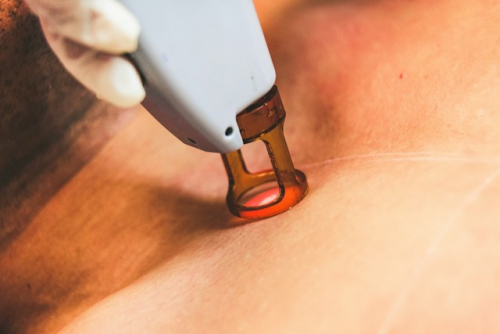
Some scientists think that removing hair might help because HS starts in the hair follicles. The alexandrite laser is a special light used for hair removal. This laser works best on lighter skin. In this study, experimenters wanted to find out if using the alexandrite laser could help people with HS.
How Did They Do the Study?
The researchers recruited 15 adult patients with HS. Each person had HS on both sides of the body in the same place (like both armpits). They used the laser on one side and left the other side untreated for comparison. People could still use mild skin medicines like clindamycin and benzoyl peroxide, but no other treatments.
Each treated area got 4 laser sessions, once every 4 weeks. They measured how well the treatment worked using something called the HiSCR score, which checks if the HS spots go away. They also asked about pain and how much fluid (discharge) came from the bumps. The main goal was to see improvement 8 weeks after the last treatment.
What Did They Find?
The results were hopeful! After about 6 months, 75% of the treated sites got better, while only about 33% of the untreated sites did. This means the laser seemed to make a real difference.
People said the laser caused some mild pain, which is normal for hair removal, but nobody stopped the treatment because of side effects. There were no serious problems.
What Does This Mean?
The study shows that using the alexandrite laser for hair removal can help people with mild to moderate HS. It is a safe and useful treatment, especially for early stages of the disease. This adds to the growing evidence that lasers can help control HS by attacking its root cause: the hair follicle.
Other lasers, like the Nd:YAG laser, also work. It's important to know that laser treatment may not work as well for people with more severe HS, where scar tissue and tunnels have formed under the skin.
Limitations and Takeaways
There are a few limitations to keep in mind. The study only had 15 patients, so results might be different in a larger group. Most people in the study had mild HS. We don't know how well this works for severe cases. The study lasted about 6 months, so we don’t know if the benefits last longer than that.
Still, this research helps show that alexandrite laser hair removal is a safe and promising option for people with early HS, and it could be added to the choices doctors offer their patients.
Author(s)
Seraphima Sidhom, Sarah Utz Petry, Rachel Ward, Steven Daveluy